Ετικέτες

Δευτέρα 7 Μαρτίου 2022

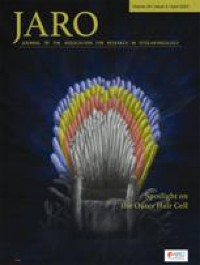
Firing Rate Adaptation of the Human Auditory Nerve Optimizes Neural Signal-to-Noise Ratios

xlomafota13 shared this article with you from Inoreader

10162.jpg

Abstract

Several physiological mechanisms act on the response of the auditory nerve (AN) during acoustic stimulation, resulting in an adjustment in auditory gain. These mechanisms include—but are not limited to—firing rate adaptation, dynamic range adaptation, the middle ear muscle reflex, and the medial olivocochlear reflex. A potential role of these mechanisms is to improve the neural signal-to-noise ratio (SNR) at the output of the AN in real time. This study tested the hypothesis that neural SNRs, inferred from non-invasive assessment of the human AN, improve over the duration of acoustic stimulation. Cochlear potentials were measured in response to a series of six high-level clicks embedded in a series of six lower-level broadband noise bursts. This paradigm elicited a compound action potential (CAP) in response to each click and to the onset of each noise burst. The ratio of CAP amplitudes elicited by each click and noise burst pair (i.e., neural SNR) was tracke d over the six click/noise bursts. The main finding was a rapid (< 24 ms) increase in neural SNR from the first to the second click/noise burst, consistent with a real-time adjustment in the response of the auditory periphery toward improving the SNR of the signal transmitted to the brainstem. Analysis of cochlear microphonic and ear canal sound pressure recordings, as well as the time course for this improvement in neural SNR, supports the conclusion that firing rate adaptation is likely the primary mechanism responsible for improving neural SNR, while dynamic range adaptation, the middle ear muscle reflex, and the medial olivocochlear reflex played a secondary role on the effects observed in this study. Real-time improvements in neural SNR are significant because they may be essential for robust encoding of speech and other relevant stimuli in the presence of background noise.

View on the web

Bioinspired Super-Strong Aqueous Synthetic Tissue Adhesives

xlomafota13 shared this article with you from Inoreader

Matter. 2022 Mar 2;5(3):933-956. doi: 10.1016/j.matt.2021.12.018. Epub 2022 Jan 25.

ABSTRACT

Existing tissue adhesives and sealants are far from satisfactory when applied on wet and dynamic tissues. Herein, we report a strategy for designing biodegradable super-strong aqueous glue (B-Seal) for surgical uses inspired by an English ivy adhesion strategy and a cement particle packing theory. B-Seal is a fast-gelling, super-strong, and elastic adhesive sealant composed of injectable water-borne biodegradable polyurethane (WPU) nanodispersions with mismatched particle sizes and counterions in its A-B formulation. B-Seal showed 24-fold greater burst pressure than DuraSeal®, 138-fold greater T-pull adhesive strength than fibrin glue, and 16-fold greater lap shear strength than fibrin glue. In vivo evaluation on a rat cerebrospinal fluid (CSF) rhinorrhea model and a porcine craniotomy model validated the safety and efficacy of B-Seal for effective C SF leak prevention and dura repair. The plant-inspired adhesion strategy combined with particle packing theory represents a new direction of designing the next-generation wet tissue adhesives for surgeries.

PMID:35252844 | PMC:PMC8896806 | DOI:10.1016/j.matt.2021.12.018

View on the web

Paget's disease of bone and megaloblastic anemia in a 72-year-old patient: A case report and systematic literature review

xlomafota13 shared this article with you from Inoreader

Exp Ther Med. 2022 Apr;23(4):269. doi: 10.3892/etm.2022.11195. Epub 2022 Feb 8.

ABSTRACT

Paget's disease of bone (PDB) is characterized by abnormal osteoclastic bone resorption with disorganized bone neo-formation, primarily affecting elderly (>55 years) patients. Although the majority of patients are asymptomatic, some patients may experience bone pain due to local periosteal involvement or osteoarthritic lesions in the spine; in addition, limb deformities may lead to secondary gait problems or degenerative joint changes. Anemia has an overall prevalence of 12-17% in elderly adults (>65 years old), with macrocytic anemia being the less common type. Megaloblastic anemia is a macrocytic anemia characterized by the presence of large, immature, nucleated cells (megaloblasts) in the blood, with the most common cause being a deficiency of folate and/or vitamin B12. We herein report the rare case of a 72-year-old male patient exhibitin g both these conditions, with the aim of discussing the possible association between the two and, most importantly, the clinical management of the patient in a real-life setting over a period of 10 years. The patient was diagnosed based on clinical symptoms (bone pain), radiological imaging and specific laboratory tests, and received discontinuous courses of bisphosphonates and cyanocobalamin supplementation therapy, based mainly on aggravated symptomatology. A systematic literature review was also performed and revealed not only the scarcity of reports on similar cases, but also the mechanisms that may underlie the possible association of PDB with macrocytic anemia due to vitamin B12 deficiency in elderly patients.

PMID:35251335 | PMC:PMC8892619 | DOI:10.3892/etm.2022.11195

View on the web

A case of musculi peronaeus tertius anatomic variation

xlomafota13 shared this article with you from Inoreader

pubmed-meta-image.png

Surg Radiol Anat. 2022 Mar 7. doi: 10.1007/s00276-022-02899-7. Online ahead of print.

ABSTRACT

In the routine dissections study for medical postgraduates, a rare anatomical variation between the right leg and the ankle was observed on the Asian male cadaver. The peronaeus tertius muscle in this cadaver's right leg divided into two tendons: the first tendon was attached to the base of the fifth metatarsal bone, and the second tendon was inserted into the base of the fourth me tatarsal bone. The purpose of this paper is to provide detailed anatomical case reports, and to discuss the possible causes and mechanisms of the variation by reviewing relevant literature, so as to provide some reference for future anatomical and clinical related disease research.

PMID:35254492 | DOI:10.1007/s00276-022-02899-7

View on the web

Bone fusion in transcele reconstruction of frontoethmoidal meningoencephalocele

xlomafota13 shared this article with you from Inoreader

Br J Neurosurg. 2022 Mar 7:1-5. doi: 10.1080/02688697.2022.2047156. Online ahead of print.

ABSTRACT

OBJECTIVE: In surgical correction of frontoethmoidal encephalocele with transcranial approach, advanced facilities are required. While with extracranial approach, though deemed as a safe option in area with limited facilities, procedure was associated with cerebrospinal fluid (CSF) leakage. In this case series, we evaluate the results of transcele reconstruction of frontoethmoidal encephalocele, our approach to reduce the incidence of CSF leaks by focusing on the closure of layers by its embryological derivatives, by its bone fusion.

METHODS: A case series of 14 patients with various types of frontoethmoidal encephalocele who underwent surgery for defect closure using transcele approach between June 2015 and December 2018 was carried out. Surgery was done by a single surgeon in the Department of Neurosurgery of Cipto Mangunkusumo Hospital in Jakarta, Indonesia. We collected the data of intraoperative blood loss and any signs of infection and CSF leak during the patients' one-year follow up. Bone fusion in the defect was evaluated from 3D rendering of head CT scan that was performed before and in 1 year after surgery.

RESULTS: The median percentage of intraoperative blood loss was 5.9% (0.5-18.7%). All 3D rendering of head CT post-surgery during 1 year follow up showed bone fusion and no patient experienced CSF leaks or CNS infections.

CONCLUSIONS: This study showed that using transcele approach in frontoethmoidal reconstruction could give good bone fusion with minimal blood loss and no CSF leaks. We assumed that closure of the layers by its embryological derivative played an important part in bone fusion and in reducing the incidence of CSF leaks, although this finding has to be validated with large-scale studies.

PMID:35254175 | DOI:10.1080/02688697.2022.2047156

View on the web

Κυριακή 6 Μαρτίου 2022

Recurrent Metastatic Parotid Acinic Cell Carcinoma Responsive to Pembrolizumab

xlomafota13 shared this article with you from Inoreader

In Vivo. 2022 Mar-Apr;36(2):1047-1051. doi: 10.21873/invivo.12801.

ABSTRACT

BACKGROUND: No clear chemotherapy regimen for recurrent or metastatic parotid cancer exists. We describe our experience with pembrolizumab to treat recurrent or metastatic parotid cancer.

CASE REPORT: A 73-year-old woman with swelling in the lower part of the right ear for 10 years before surgery was diagnosed with right parotid cancer, underwent total right parotidectomy, and reported recurrence. She requested treatment due to diminished quality of life caused by neurological symptoms. Tissue was collected from the recurrent lesion and its combined positive score was >20; pembrolizumab was started 9 years postoperatively.

RESULTS: To date, the patient has received 14 cycles of pembrolizumab. Evaluation by computed tomography showed a partial response to treatment. The only immune-related adverse event was grade 1 pneumonia in both lungs.

C ONCLUSION: Significant response to pembrolizumab in recurrent or metastatic parotid cancer is rarely reported, making this a remarkable case. We plan to continue pembrolizumab administration.

PMID:35241570 | DOI:10.21873/invivo.12801

View on the web

Sequential Loss of Mandibular Permanent Incisors in Noonan Syndrome

xlomafota13 shared this article with you from Inoreader

In Vivo. 2022 Mar-Apr;36(2):1021-1029. doi: 10.21873/invivo.12797.

ABSTRACT

BACKGROUND: Noonan syndrome (NS) is a multigenic disorder with a highly variable phenotype. Cardiac disorders and a predisposition to neoplasm often require early medical attention. Central giant central lesions (CGCLs) of the jaws are part of the phenotype.

CASE REPORT: In a patient with genetically confirmed NS and multiple teeth loss presumably caused by CGCL, careful review of the medical history and radiographic findings made it probable that the cause of tooth loss was cervical root resorption (CRR) of the teeth following long-term orthodontic therapy.

CONCLUSION: CRR is a rare dental disease of unknown origin. However, association with prior orthodontic therapy is well documented. In NS, mandibular lesions can occur which, at first glance, might lead the examiner to assume that it is a CGCL, but on closer analysis, obviously are of non-tumoro us origin and should be assessed as coincidental. The report adds relevant information to orthodontic treatment of NS patients.

PMID:35241566 | DOI:10.21873/invivo.12797

View on the web

PKM2 Is Overexpressed in Glioma Tissues, and Its Inhibition Highly Increases Late Apoptosis in U87MG Cells With Low-density Specificity

xlomafota13 shared this article with you from Inoreader

In Vivo. 2022 Mar-Apr;36(2):694-703. doi: 10.21873/invivo.12755.

ABSTRACT

BACKGROUND/AIM: Pyruvate kinase M2 (PKM2) functions as an important rate-limiting enzyme in aerobic glycolysis and is involved in tumor initiation and progression. However, there are few studies on the correlation between PKM2 expression and its role in glioma.

MATERIALS AND METHODS: PKM2 expression was immunohistochemically examined in human brain tumor samples. Furthermore, we studied the effects of two PKM2 inhibitors (shikonin and compound 3K) on the U87MG glioma cell line.

RESULTS: PKM2 was overexpressed in most glioma tissues when compared to controls. Interestingly, glioma-adjacent tissues from showed slight PKM2 overexpression. This suggests that PKM2 overexpression maybe an important trigger factor for glioma tumorigenesis. We found that the PKM2 inhibitor shikonin was effective against U87MG cells at a relatively low dose and was largely dep endent on low cellular density compared to the effects of the anticancer drug vincristine. Shikonin highly increased late-apoptosis of U87MG cells. We also demonstrated that autophagy was involved in the increase in late-apoptosis levels caused by shikonin. Although vincristine treatment led to a high level of G2-phase arrest in U87MG cells, shikonin did not increase G2 arrest. Co-treatment with two PKM2 inhibitors, shikonin and compound 3K, increased the inhibitory effects.

CONCLUSION: Combination therapy with PKM2 inhibitors together might be more effective than combination therapy with anticancer drugs. Our findings encourage the application of PKM2-targeting in gliomas, and lay the foundation for the development of PKM2 inhibitors as promising antitumor agents for glioma.

PMID:35241524 | DOI:10.21873/invivo.12755

View on the web

Endonasal Acoustic Doppler Sonography in Predicting the Survival of Nasoseptal Flap Following Previous Irradiation

xlomafota13 shared this article with you from Inoreader

Objective

Blood supply to the nasoseptal flap may be compromised in patients who had previous irradiation to the head and neck region, hence, affecting its viability. Here, we evaluate the role of an endonasal acoustic Doppler sonography in predicting the survival of the nasoseptal flap in this group of patients.

Study Design

Retrospective cohort.

Methods

Retrospective review of patients with previous irradiation to the head and neck region who had undergone endoscopic endonasal surgeries requiring nasoseptal flap as reconstruction. Survival rates of nasoseptal flap were compared between groups where endonasal Doppler was used.

Results

A total of 28 patients were identified with previous irradiation to the head and neck region who had undergone endoscopic endonasal surgeries requiring nasoseptal flap as reconstruction. The overall survival rate of nasoseptal flap is 67.8% (19 out of 28). Endonasal acoustic Doppler was used in 17 of these patients, of which 13 patients had a positive signal. The flap survival rate in the Doppler-positive group compared to the non-Doppler group was significantly better at 100% vs 45.4% (P = .003). Among those where the endonasal Doppler was used, the flap survival rate with a negative doppler signal was significantly worse at 25%, compared with 100% flap survival in those with positive doppler signal (P = .006). The positive predictive value of a positive endonasal Doppler signal with flap survival is 100%.

Conclusion

The use of endonasal acoustic Doppler may be useful in predicting the viability of nasoseptal flap in postirradiated patients who need a local mucosal flap coverage.

Level of Evidence

Level 3 Laryngoscope, 2022

View on the web

Smoothed Cepstral Peak Analysis

xlomafota13 shared this article with you from Inoreader
Childhood and adolescence are essential stages in the development of voice and speech quality; therefore, it is essential to understand the vocal changes that occur during this period. Frequency-based measurement methods like cepstral measurements stand out among the methods described, which are able to identify fo and estimate the periodicity and noise in the acoustic wave without establishing individual cycles of the sound wave.
View on the web

Whole‐transcriptome sequencing identifies postzygotic ATP2A2 mutations in a patient misdiagnosed with herpes zoster, confirming the diagnosis of very late‐onset segmental Darier disease

xlomafota13 shared this article with you from Inoreader

ABSTRACT

An 82-year-old female patient presented with a recent onset of painful skin lesions in unilateral distribution on the abdominal area following the lines of Blaschko; the initial diagnosis of Varicella-zoster infection was made. However, because the individual lesions appeared as hyperkeratotic papules and were unresponsive to antiviral therapy, a skin biopsy was performed, which revealed hyperkeratosis, suprabasal acantholysis and dyskeratosis with corps ronds and grains, consistent with acantholytic dyskeratotic acanthoma. Since this entity has been associated with Darier disease, whole transcriptome sequencing by RNA-Seq was performed on RNA isolated from a lesion as well as from adjacent normal appearing skin, and a recently developed bioinformatics pipeline that can identify both genomic sequence variants and the presence of any of over 900 viruses was applied. Two pathogenic missense mutations in the ATP2A2 gene were identified in the lesional but not in normal appeari ng skin, and no evidence of Varicella-Zoster infection was obtained. These findings confirm the diagnosis of segmental Darier disease due to postzygotic mutations in the ATP2A2 gene, and attest to the power of a novel single-step application of RNA-Seq in providing correct diagnosis in this rare genodermatosis.

View on the web

Αναζήτηση αυτού του ιστολογίου