Ετικέτες

Τρίτη 5 Απριλίου 2022

Comparison of Responses to DCN vs. VCN Stimulation in a Mouse Model of the Auditory Brainstem Implant (ABI)

paythelady.61 shared this article with you from Inoreader

Abstract

The auditory brainstem implant (ABI) is an auditory neuroprosthesis that provides hearing to deaf patients by electrically stimulating the cochlear nucleus (CN) of the brainstem. Whether such stimulation activates one or the other of the CN's two major subdivisions is not known. Here, we demonstrate clear response differences from the stimulation of the dorsal (D) vs. ventral (V) subdivisions of the CN in a mouse model of the ABI with a surface-stimulating electrode array. For the DCN, low levels of stimulation evoked multiunit responses in the inferior colliculus (IC) that were unimodally distributed with early latencies (avg. peak latency of 3.3 ms). However, high levels of stimulation evoked a bimodal distribution with the addition of a late latency response peak (avg. peak latency of 7.1 ms). For the VCN, in contrast, electrical stimulation elicited multiunit responses that were usually unimodal and had a latency similar to the DCN's late respon se. Local field potentials (LFP) from the IC showed components that correlated with early and late multiunit responses. Surgical cuts to sever the output of the DCN, the dorsal acoustic stria (DAS), gave insight into the origin of these early and late responses. Cuts eliminated early responses but had little-to-no effect on late responses. The early responses thus originate from cells that project through the DAS, such as DCN's pyramidal and giant cells. Late responses likely arise from the spread of stimulation from a DCN-placed electrode array to the VCN and could originate in bushy and/or stellate cells. In human ABI users, the spread of stimulation in the CN may result in abnormal response patterns that could hinder performance.

View on the web

Δευτέρα 4 Απριλίου 2022

Occlusal schemes for complete dentures

paythelady.61 shared this article with you from Inoreader

Message:

APR
4
2022Profile photo of Derek Richards
Posted by
Derek Richards
shutterstock_13679275
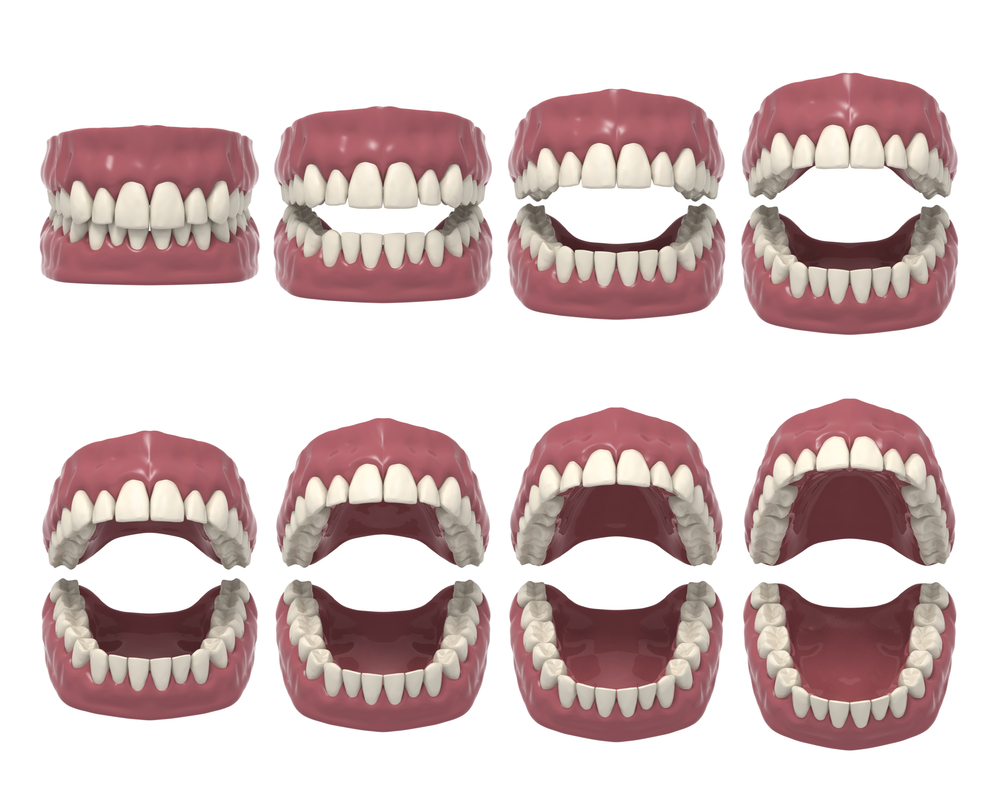
Occlusal schemes for complete dentures may influence clinical performance and patient satisfaction. Patient characteristics such as alveolar ridge shape and height also influence choice of scheme. There are several schemes to choose from including bilateral balanced, lingualised, canine guidance, group function, and monoplane. A number of studies and reviews have been conducted but a consensus on an ideal occlusal scheme if lacking.

The aim of this overview was to assess the methodological quality and summarize the scientific evidence from secondary studies about the influence of occlusal schemes on the clinical performance of and patient satisfaction with complete dentures.

Methods
A protocol for the review was registered with PROSPERO. Searches were carried out in the Cochrane Library, PubMed, Embase, LILACS, Scopus, the Web of Science, PROSPERO, Google Scholar and Open Science Framework databases. Systematic reviews that included randomized or non-randomized clinical trials evaluating conventional complete dentures with different occlusion schemes on clinical performance and patient satisfaction were considered. Two reviewers independently selected studies and extracted data with disagreements being resolved by a third reviewers. The AMSTAR 2 tool was used to assess the quality of the reviews. The effect of each occlusal scheme in comparison with others was summarized and classified as positive, neutral, negative, or inconclusive based on the conclusions of the systematic review concerning clinical performance and patient satisfaction outcomes.

Results
10 systematic reviews were included.
All 10 reviews included randomised controlled trials (RCTs) 5 also included prospective studies, 2 included other systematic reviews, 2 included clinical studies involving partial dentures or implants.
No meta-analyses were presented in any of the 10 reviews.
Confidence in the reviews was rated as critically low for 7 reviews, low for 2 reviews and moderate for one review using the AMSTAR 2 tool.
Summary suggested that occlusal schemes may influence objective and subjective clinical performance and patients' satisfaction.
Conclusions
The authors concluded: –

.occlusal schemes might interfere with the clinical performance of and patient satisfaction with complete dentures. Lingualized, bilateral balanced, and canine guidance are preferred compared with monoplane occlusion, but lingualized occlusion tends to show better results in some reviews. However, the results should be carefully considered because of the low quality of the systematic reviews included.

shutterstock_13679275.jpg

This overview of reviews of the influence of occlusal schemes on the clinical performance of and patient satisfaction with complete dentures included 10 systematic reviews. While the findings suggest that occlusal schemes might interfere with the clinical performance the results should be carefully considered because of the low quality of the systematic reviews included.

The post Occlusal schemes for complete dentures appeared first on National Elf Service.

View on the web

Improvement of osseointegration of Ti–6Al–4V ELI alloy orthodontic mini-screws through anodization, cyclic pre-calcification, and heat treatments

paythelady.61 shared this article with you from Inoreader
Mini-screws are widely used as temporary anchorages in orthodontic treatment, but have the disadvantage of showing a high failure rate of about 10%. Therefore, orthodontic mini-screws should have high biocompa...
View on the web

Metabolic Syndrome and Periodontitis among Adults

paythelady.61 shared this article with you from Inoreader

Abstract

Aim

This study aimed to examine the association between metabolic syndrome (MetS), its components, and periodontitis among Indonesian adults.

Materials and Methods

Cross-sectional data from the 2018 Indonesia National Health Survey (Riskesdas) was analysed. The sample included dentate individuals aged 35 years or older for whom complete information was available on components of MetS and periodontitis, including bleeding on probing (BOP) (N=13,356), pocket depth (PD) (N=13,273), and clinical attachment loss (CAL) (N=13,000). Rate ratios (RRs) and 95% confidence intervals (CIs) were estimated with negative binomial regression models.

Results

The prevalence of MetS was 41.0%. The prevalences of individuals having at least one tooth with BOP, one tooth with PD ≥4 mm, or one sextant with CAL ≥4 mm were 74.9%, 40.7%, and 40.6%, respectively. No associations were observed between MetS and BOP, PD, or CAL, but hyperglycaemia was constantly positively associated with BOP (RR=1.06; 95% CI 1.01-1.11), PD (RR=1.13; 95% CI 1.03-1.23), and CAL (RR=1.15; 95% CI 1.08-1.23).

Conclusions

Our findings support the potential influence of hyperglycaemia on periodontitis. Incorporating oral disease prevention strategies into the management of systemic diseases could be beneficial for reducing the burden of these diseases in Indonesia.


View on the web

Does social support predict increased use of dental services in older men?

paythelady.61 shared this article with you from Inoreader

Abstract

Background

Past research on social support and dental visits in older people has been limited by cross-sectional design, limited social support dimensions, and non-representative samples.

Methods

Data came from men with natural teeth completing Waves 3 and 4 of the Concord Health and Ageing in Men Project (CHAMP) in Sydney, Australia. The relationship between social support at Wave 3 (2011-2012) and at least one dental visit per year at Wave 4 (2014-2016) was examined by Poisson regression. Social support was measured by structural (marital status, living arrangements, family support, social interaction) and functional (social support satisfaction) domains.

Results

There were 673 men analysed. Structural and functional social support were not associated with the pattern of usual dental visits five years later in univariable or multivariable analyses. The only consistent significant factor was income source, with older men who had other sources of income more likely to regularly visit the dentist than older men solely reliant on the pension for income (PR: 1.31, 95% CI: 1.13 – 1.52).

Conclusions

We found no differences in the pattern of usual dental visits between older men with different levels and types of social support. For older Australian men, income source seems to be the most important determinant of regular dental visits. © 2022 Australian Dental Association

View on the web

Modification of an extended total temporomandibular joint replacement (eTMJR) classification system

paythelady.61 shared this article with you from Inoreader
The aims of this paper were to validate a modification of an extended total temporomandibular joint replacement (eTMJR) classification system and develop a classification schematic for ease of reference. High volume TMJ surgeons were asked to score 20 separate eTMJR devices using the updated classification system and inter-rater variability was calculated. Using the modified classification system developed, a Conger's kappa (k) coefficient of 0.53 was returned, suggesting moderate to good levels of agreement.
View on the web

Κυριακή 3 Απριλίου 2022

Envista Obtains FDA Clearance for Assisted Intelligence Mandibular Nerve Tracing

paythelady.61 shared this article with you from Inoreader


 We are seeing more and more artificial intelligence systems enter into the healthcare space and dentistry in general.  Envista is a large player in the dental space, owning several companies under t he "umbrella" of Envista.

Many of the companies that are owned by Envista have products in the tech sphere and the company works hard with research & development to expand the use of its technologies across its portfolio.

Now comes word that the company has received FDA clearance for mapping of the inferior alveolar nerve.  The process, which has been referred to as "nerve tracing" for years has, until now, required manual input from the doctor. 

Before this discovery, it was necessary for the office to take a CBCT scan and then manually trace points along the mandibular canal.  When completed, the software would plot a line through all of the points to indicate the location of the canal throughout the mandible.

Now... that process has been automated.  I recently made a post about the dental A.I. company Pearl and how that company's FDA clearance was a watershed moment in dentistry.  Now we've reached another A.I. milestone in the profession.  This announcement is groundbreaking and these types of A.I. assisted procedures are only going to become more commonplace.

The profession has shown the FDA that these types of systems work reliably and this is only the beginning.  Here is full announcement from Envista:

Envista announced today the 510(k) Food and Drug Administration (FDA) clearance of its Assisted Intelligence (AI) mandibular nerve tracing feature in its image acquisition and diagnostic software platform DTX Studio Clinic.

The tracing of the mandibular nerve in modern dentistry is of high significance as it influences the available therapeutic options for the patient. The proper visualization of the nerve can prevent complications. When done manually, it is a task that can be both time-consuming and error prone. DTX's AI capabilities supports clinicians as they perform this important task.

This clearance complements a series of AI-powered functionality in DTX Studio Clinic. In 2017, Envista obtained FDA clearance for its AI-driven 3D virtual tooth setup algorithm. In 2020, a further clearance was received for automatic tooth position identification and automated sorting of full-mouth x-ray series. On March 25, the FDA cleared the third AI-focused 510(k) for the fully automated mandibular nerve tracing on CBCT scans.

Amir Aghdaei, Envista CEO, said, "This cle arance is another important step towards our digital strategy of expanding the capabilities of our powerful, unified, and open dental diagnostic software platform DTX Studio Clinic. With its combination of a user-friendly interface and AI-driven functionality, DTX Studio Clinic reduces the time clinicians spend on time-consuming tasks, while simultaneously helping prevent complications and enabling increased focus on the patient. We are particularly proud of our fully automated mandibular nerve tracing functionality with its high clinical relevance for dental implant-based patient rehabilitations."

About Envista Holdings Corporation

Envista is a global family of more than 30 trusted dental brands, including Nobel Biocare, Ormco, DEXIS, and Kerr united by a shared purpose: to partner with professionals to improve lives. Envista helps its customers deliver the best possible patient care through industry-leading dental consumables, solutions, technology, and services. Our comprehensive portfolio, including dental implants and treatment options, orthodontics, and digital imaging technologies, covers a broad range of dentists' clinical needs for diagnosing, treating, and preventing dental conditions as well as improving the aesthetics of the human smile. With a foundation comprised of the proven Envista Business System (EBS) methodology, an experienced leadership team, and a strong culture grounded in continuous improvement, commitment to innovation, and deep customer focus, Envista is well equipped to meet the end-to-end needs of dental professionals worldwide. Envista is one of the largest global dental products companies, with significant market positions in some of the most attractive segments of the dental products industry. For more information, pl ease visit www.envistaco.com.

View on the web

Association of age-related decrease in intracellular-to-total water ratio with that in explosive strength of the plantar flexors: a cross-sectional study

paythelady.61 shared this article with you from Inoreader
We aimed to investigate the association of age-related differences in the intracellular-to-total water ratio with explosive strength of the plantar flexors.
View on the web

Benign paroxysmal positional vertigo

paythelady.61 shared this article with you from Inoreader
Benign paroxysmal positional vertigo (BPPV) is characterized by positional vertigo (brief attacks of rotatory vertigo triggered by head position changes in the direction of gravity) and is the most common peripheral cause of vertigo. There are two types of BPPV pathophysiology: canalolithiasis and cupulolithiasis. In canalolithiasis, otoconial debris is detached from the otolithic membrane and floats freely within the endolymph of the canal. In cupulolithiasis, the otoconial debris released from the otolithic membrane settles on the cupula of the semicircular canal and the specific gravity of the cupula is increased.
View on the web

Πέμπτη 31 Μαρτίου 2022

Descriptive analysis of recurrences of nasal intestinal‐type adenocarcinomas after radiotherapy

paythelady.61 shared this article with you from Inoreader

Abstract

Background

Despite adjuvant radiotherapy, rates of recurrences of endoscopically operated nasal intestinal-type adenocarcinomas (ITAC) have not been improved in successive series. To better understand how to improve local control, we aimed to investigate the site of local recurrences of ITACs.

Methods

Retrospective study in a reference center in sinonasal malignancies. For all patients with a local recurrence, radiotherapy plans were retrieved and compared to the delineation of local recurrences.

Results

Of 63 patients, 54 underwent adjuvant radiotherapy of which 14 (25.9%) had a local recurrence. Eleven of them had their onset in an optimally irradiated area. Difficulty to dissect the cribriform plate and/or the lateral lamina was reported for 11 patients with local recurrences in the operative reports (p <0.0001).

Conclusions

Most of recurrences arose in an optimally irradiated area. A close cooperation between surgeons and radiotherapists is required to define areas at risk and adapt treatment.

View on the web

Key Issues in Use of Prophylactic Steroids to Prevent Hypocalcemia and Voice Dysfunction After Thyroidectomy—Reply

paythelady.61 shared this article with you from Inoreader

jamanetwork.com

In Reply We thank Ms Kane and colleagues for their feedback on our article.
View on the web

Expert consensus on dental caries management

paythelady.61 shared this article with you from Inoreader

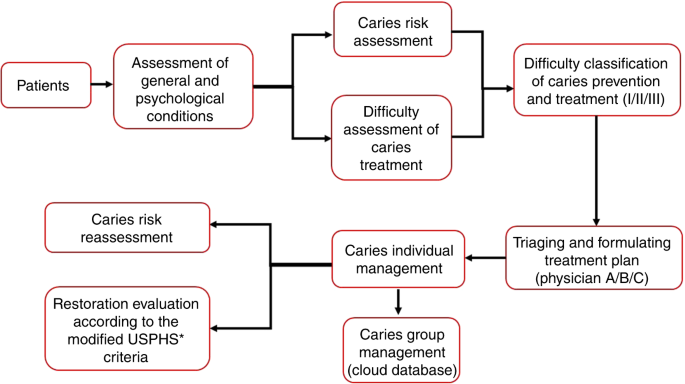
41368_2022_167_Fig1_HTML.png

International Journal of Oral Science, Published online: 31 March 2022; doi:10.1038/s41368-022-00167-3

Expert consensus on dental caries management
View on the web

Αναζήτηση αυτού του ιστολογίου