Ετικέτες

Τετάρτη 14 Απριλίου 2021

In-hospital Course and Complications of Laminectomy Alone Versus Laminectomy Plus Instrumented Posterolateral Fusion for Lumbar Degenerative Spondylolisthesis: A Retrospective Analysis of 1804 Patients from the NSQIP Database

xloma.fota13 shared this article with you from Inoreader
imageStudy Design. Retrospective analysis of data from the National Surgical Quality Improvement Program (NSQIP). Objective. We sought to compare the short-term outcomes of laminectomy with/without fusion for single-level lumbar degenerative spondylolisthesis (DS). Summary of Background Data. Lumbar DS is a common cause of low back and radicular pain. Controversy remains over the safety and efficacy of fusion in addition to standard decompressive surgery. Methods. Patients with lumbar DS who underwent laminectomy alone or laminectomy plus posterolateral fusion at a single level were identified from the 2012–2017 NSQIP database. Outcomes included 30-day mortality, major complication, reoperation, readmission, as well as operative duration, need for blood transfusion, length of stay (LOS), and discharge destination. Outcomes were compared between treatment groups by multivariable regression, adjusting for age, sex, and comorbidities (modified Frailty Index). Effect sizes were reported by adjusted odds ratio (aOR) or mean difference (aMD). Results. The study cohort consisted of 1804 patients; of these, 802 underwent laminectomy alone and 1002 laminectomy plus fusion. On both unadjusted and adjusted analyses, there was no difference in 30-day mortality, major complications, reoperation, or readmission. However, laminectomy plus fusion was associated with longer operative time (170.0 vs. 152.7 minutes; aMD 16.00 minutes, P 
View on the web

Surgical Site Infection, Readmission, and Reoperation After Posterior Long Segment Fusion

xloma.fota13 shared this article with you from Inoreader
imageStudy Design. Retrospective case series. Objective. We sought to identify risk factors associated with surgical site infection (SSI) after posterior long segment spinal fusion (PLSF). Summary of Background Data. Patients who undergo PLSF may be at elevated risk of SSI. Identifying factors associated with SSI in these operations can help risk stratify patients and tailor management. Methods. We analyzed PLSFs—seven or more levels—at our institution from 2000 to 2015. Data on patients' clinical characteristics, procedural factors, and antimicrobial management were collected. Multivariable analysis identified factors independently associated with outcomes of interest. Results. In 628 cases, SSI was associated with steroid use (P = 0.024, odds ratio [OR] = 2.54) and using cefazolin (P 
View on the web

Cancers, Vol. 13, Pages 1891: Tumor Solid Stress: Assessment with MR Elastography under Compression of Patient-Derived Hepatocellular Carcinomas and Cholangiocarcinomas Xenografted in Mice

xloma.fota13 shared this article with you from Inoreader
Via Cancers

cancers-13-01891-ag-550.jpg

Cancers, Vol. 13, Pages 1891: Tumor Solid Stress: Assessment with MR Elastography under Compression of Patient-Derived Hepatocellular Carcinomas and Cholangiocarcinomas Xenografted in Mice

Cancers doi: 10.3390/cancers13081891

Authors: Gwenaël Pagé Marion Tardieu Jean-Luc Gennisson Laurent Besret Philippe Garteiser Bernard E. Van Beers

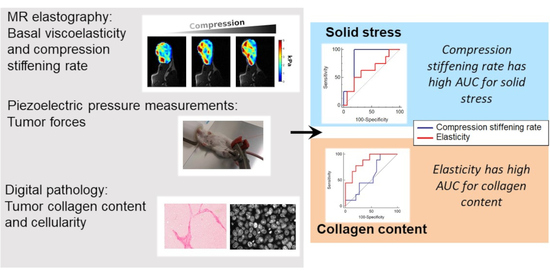
Malignant tumors have abnormal biomechanical characteristics, including high viscoelasticity, solid stress, and interstitial fluid pressure. Magnetic resonance (MR) elastography is increasingly used to non-invasively assess tissue viscoelasticity. However, solid stress and interstitial fluid pressure measurements are performed with invasive methods. We studied the feasibility and potential role of MR elastography at basal state and under controlled compression in assessing altered biomechanical features of malignant liver tumors. MR elastography was performed in mice with patient-derived, subcutaneously xenografted hepatocellular carcinomas or cholangiocarcinomas to measure the basal viscoelasticity and the compression stiffening rate, which corresponds to the slope of elasticity versus applied compression. MR elastography measurements were correlated with invasive pressure measurements and digital histological readings. Significant differences in MR elastography parameters, pres sure, and histological measurements were observed between tumor models. In multivariate analysis, collagen content and interstitial fluid pressure were determinants of basal viscoelasticity, whereas solid stress, in addition to collagen content, cellularity, and tumor type, was an independent determinant of compression stiffening rate. Compression stiffening rate had high AUC (0.87 ± 0.08) for determining elevated solid stress, whereas basal elasticity had high AUC for tumor collagen content (AUC: 0.86 ± 0.08). Our results suggest that MR elastography compression stiffening rate, in contrast to basal viscoelasticity, is a potential marker of solid stress in malignant liver tumors.

View on the web

Characteristics of esophageal motility and clinical presentation in gastroesophageal reflux disease patients of different age groups

xloma.fota13 shared this article with you from Inoreader

Zhonghua Yi Xue Za Zhi. 2021 Apr 13;101(14):1015-1019. doi: 10.3760/cma.j.cn112137-20200713-02110.

ABSTRACT

Objective: To explore the characteristics of esophageal motility and clinical presentation in gastroesophageal reflux disease (GERD) patients of different age groups. Methods: This was a case-control study. Confirmed GERD patients in the Department of Gastroenterology of Peking Union Medical College Hospital from January 2015 to September 2018 were enrolled and divided into two groups: elderly group (≥60 years old) and young and middle-aged group (<60 years old). Characteristics of gender, disease course, clinical symptoms, esophageal motility, gastroscopic manifestations and esophageal hiatus function of patients in the two groups were analyzed. Results: A total of 250 patients met the inclusion criteria, with 61 patients in elderly group and 189 in young and middle-aged group. There were no significant differ ences in gender ((male/female: 24/37 vs 78/111, P>0.05) and disease course((4.9±4.2) years vs(4.5±3.8)years, P>0.05) between the two groups. However, there were significant differences in typical symptoms (acid regurgitation and heartburn) and atypical symptoms (chest pain, cough, foreign body sensation in pharynx, etc.) (typical/atypical symptoms: 35/26 vs 146/43, P<0.01) between the two groups. Compared with young and middle-aged group, upper esophageal sphincter (UES) resting pressure was lower ((65±28) mmHg (1 mmHg=0.133 kPa)vs (74±28) mmHg, P<0.05), but the percentage of ineffective esophageal motility (IEM) (78.7%(48/61) vs 65.1%(123/189),P<0.05) and DeMeester score (16.3(6.0,36.3) vs 6.4(2.5,18.0), P<0.05) were higher in elderly group. There were no significant differences in lower esophageal sphincter (LES) resting pressure and distal contractile integral (DCI) between the two groups. Higher proportion of grade C and D reflux esophagitis,and grade C and D reflux esophagitis complicated with esophageal hiatus dysfunction was observed in elderly group compared with young and middle-aged group (2.04%(8/49) vs 0.65%(1/155); 14.29%(7/49) vs 0(0/155); both P<0.01). Pearson correlation analysis showed that there was a negative correlation between UES resting pressure and age(r=-0.145, P<0.05), while there was a positive correlation between the LES length and age (r=0.129, P<0.05). Conclusion: Compared with young and middle-aged GERD patients, the atypical symptoms, lower LES resting pressure, increased incidence of ineffective esophageal motility and acid exposure were more prominent in the elderly. Considering that anti-reflux function was weakened, long-term acid suppressants may be needed in elderly patients.

PMID:33845540 | DOI:10.3760/cma.j.cn112137-20200713-02110

View on the web

Botulinum toxin type A versus anticholinergics for cervical dystonia

xloma.fota13 shared this article with you from Inoreader

Cochrane Database Syst Rev. 2021 Apr 14;4:CD004312. doi: 10.1002/14651858.CD004312.pub3.

ABSTRACT

BACKGROUND: This is an update of a Cochrane Review first published in 2005. Cervical dystonia is the most common form of focal dystonia and is a highly disabling movement disorder, characterised by involuntary, usually painful, head posturing. Currently, botulinum toxin type A (BtA) is considered the first line therapy for this condition. Before BtA, anticholinergics were the most widely accepted treatment.

OBJECTIVES: To compare the efficacy, safety, and tolerability of BtA versus anticholinergic drugs in adults with cervical dystonia.

SEARCH METHODS: We searched the Cochrane Movement Disorders' Trials Register to June 2003, screened reference lists of articles and conference proceedings to September 2018, and searched CENTRAL, MEDLINE, and Embase, with no language restrictions, to July 2020.

SELECTION CRITERIA: Double-blind, p arallel, randomised trials (RCTs) of BtA versus anticholinergic drugs in adults with cervical dystonia.

DATA COLLECTION AND ANALYSIS: Two review authors independently assessed records, selected included studies, extracted data using a paper pro forma, and evaluated the risk of bias and quality of the evidence. We resolved disagreements by consensus or by consulting a third review author. If enough data had been available, we were to perform meta-analyses using a random-effects model for the comparison of BtA versus anticholinergic drugs to estimate pooled effects and corresponding 95% confidence intervals (95% CI). The primary efficacy outcome was improvement in cervical dystonia-specific impairment. The primary safety outcome was the proportion of participants with any adverse event.

MAIN RESULTS: We included one RCT of moderate overall risk of bias (as multiple domains were at unclear risk of bias), which included 66 BtA-naive participants with cervical dystonia. Two d oses of BtA (Dysport; week 0 and 8; mean dose 262 to 292 U) were compared with daily trihexyphenidyl (up to 24 mg daily). The trial was sponsored by the BtA producer. BtA reduced cervical dystonia severity by an average of 2.5 points (95% CI 0.68 to 4.32) on the Toronto Western Spasmodic Torticollis Rating Scale (TWSTRS) severity subscale 12 weeks after injection, compared to trihexyphenidyl. More participants reported adverse events in the trihexyphenidyl treatment group (76 events), compared with the BtA group (31 events); however, the difference in dropouts due to adverse events was inconclusive between groups. There was a decreased risk of dry mouth, and memory problems with BtA, but the differences were inconclusive between groups for the other reported side effects (blurred vision, dizziness, depression, fatigue, pain at injection site, dysphagia, and neck weakness).

AUTHORS' CONCLUSIONS: We found very low-certainty evidence that BtA is more effective, better tolerated, and safer than trihexyphenidyl. We found no information on a dose-response relationship with BtA, differences between BtA formulations or different anticholinergics, the utility of electromyography-guided injections, or the duration of treatment effect.

PMID:33852744 | DOI:10.1002/14651858.CD004312.pub3

View on the web

Recurrence of dysphagia post-myotomy: etiologies and management

xloma.fota13 shared this article with you from Inoreader

Rev Col Bras Cir. 2021 Apr 9;48:e20202973. doi: 10.1590/0100-6991e-20202973. eCollection 2021.

NO ABSTRACT

PMID:33852705 | DOI:10.1590/0100-6991e-20202973

View on the web

Cancers, Vol. 13, Pages 1891: Tumor Solid Stress: Assessment with MR Elastography under Compression of Patient-Derived Hepatocellular Carcinomas and Cholangiocarcinomas Xenografted in Mice

xloma.fota13 shared this article with you from Inoreader
Via Cancers

cancers-13-01891-ag-550.jpg

Cancers, Vol. 13, Pages 1891: Tumor Solid Stress: Assessment with MR Elastography under Compression of Patient-Derived Hepatocellular Carcinomas and Cholangiocarcinomas Xenografted in Mice

Cancers doi: 10.3390/cancers13081891

Authors: Gwenaël Pagé Marion Tardieu Jean-Luc Gennisson Laurent Besret Philippe Garteiser Bernard E. Van Beers

Malignant tumors have abnormal biomechanical characteristics, including high viscoelasticity, solid stress, and interstitial fluid pressure. Magnetic resonance (MR) elastography is increasingly used to non-invasively assess tissue viscoelasticity. However, solid stress and interstitial fluid pressure measurements are performed with invasive methods. We studied the feasibility and potential role of MR elastography at basal state and under controlled compression in assessing altered biomechanical features of malignant liver tumors. MR elastography was performed in mice with patient-derived, subcutaneously xenografted hepatocellular carcinomas or cholangiocarcinomas to measure the basal viscoelasticity and the compression stiffening rate, which corresponds to the slope of elasticity versus applied compression. MR elastography measurements were correlated with invasive pressure measurements and digital histological readings. Significant differences in MR elastography parameters, pres sure, and histological measurements were observed between tumor models. In multivariate analysis, collagen content and interstitial fluid pressure were determinants of basal viscoelasticity, whereas solid stress, in addition to collagen content, cellularity, and tumor type, was an independent determinant of compression stiffening rate. Compression stiffening rate had high AUC (0.87 ± 0.08) for determining elevated solid stress, whereas basal elasticity had high AUC for tumor collagen content (AUC: 0.86 ± 0.08). Our results suggest that MR elastography compression stiffening rate, in contrast to basal viscoelasticity, is a potential marker of solid stress in malignant liver tumors.

View on the web

Τρίτη 13 Απριλίου 2021

Agent-Based Modeling Simulation of Nurse Medication Administration Errors

xloma.fota13 shared this article with you from Inoreader
imageIt has been 20 years since the National Academy of Medicine released its report, "To Err Is Human," which shocked the healthcare community on the pervasiveness of medical error. While errors in medication administration are a significant contributor to medical error, research seeking to understand the complex systems nature and occurrence of medication administration error is limited. Computer modeling is increasingly being used in the healthcare industry to assess the impact of changes made to healthcare processes. The objective of the study is to evaluate the use of agent-based modeling, a type of computer modeling th at allows the simulation of virtual individuals and their behavior, to simulate nurse performance in the medication administration process. The model explores the effect of Just-in-Time information, as an intervention, on the occurrence of medication error. The model demonstrated significant utility in understanding the interplay of the system elements of the nurse medication administration process. Therefore this approach, using systems-level computer simulation such as agent-based models, can help administrators understand the effects of changes to the medication administration process as they work to reduce errors and increase performance.
View on the web

The Byzantine Role of Big Data Application in Nursing Science: A Systematic Review

xloma.fota13 shared this article with you from Inoreader
imageBig data have the potential to determine enhanced decision-making process and to personalize the approach of delivering care when applied in nursing science. So far, the literature on this topic is still not synthesized for the period between 2014 and 2018. Thus, this systematic review aimed to identify and synthesize the most recent evidence on big data application in nursing research. The systematic search was undertaken for the evidence published from January 2014 to May 2018, and the outputs were formatted using the PRISMA Flow Diagram, whereas the quality appraisal was addressed by recommendations consistent with the Critical Appraisal Skills Program. Twelve studies on big data in nursing were included and divided into two themes: the majority of the studies aimed to determine prediction assessment, while only four studies were related to the impact of big data applications to support clinical practice. This review tracks the recent state of knowledge on big data applications in nursing science, revealing the potential for nursing engagement in big data science, even if currently limited to some fields. Big data applications in nursing might have a tremendous potential impact, but are currently underused in research and clinical practice.
View on the web

Using a Systems Engineering Approach to Design an Interactive Mobile Health Application for Improving Asthma Self-management

xloma.fota13 shared this article with you from Inoreader
imageMobile health applications are in demand. According to the Grand Review Research group, there were US $12.4 billion in mobile health app sales in 2018. Increasingly, providers are seeking new ways to engage their pediatric patients. One approach is through mobile health apps. Nearly 10 000 mobile health apps target youth and teens, especially for children with conditions that require complex treatment and self-management. One such chronic illness is asthma. Children with asthma who lack social support are particularly vulnerable to exacerbations because they often are not focused on self-care. For this reason, succ essful asthma programs for children engage family members, encouraging them to play an active role on the healthcare team. The Just-in-Time Asthma Self-management Intervention is unique in several ways compared to other asthma management mobile applications. The app uses gold standard, evidence-based asthma care practices and extends the support infrastructure beyond family and healthcare providers to engage the child, their peers, and school personnel. Further, the app was built using a systems engineering approach. This article reviews the basis for developing an asthma care mobile application including the conceptual framework supporting a systems model, how the Just-in-Time Asthma Self-management Intervention is unique, and how it was built using a systems engineering design.
View on the web

Hygiene bei der HNO-Untersuchung: Fluoreszenzstudie mit Übersicht der aktuellen Empfehlungen

xloma.fota13 shared this article with you from Inoreader

Laryngorhinootologie
DOI: 10.1055/a-1408-7046

Steigende normative Ansprüche an Patientensicherheit und Maßnahmen der Qualitätssicherung, aber auch die Problematik multiresistenter Keime und von Erregern mit hohem Ansteckungspotenzial verstärken die Notwendigkeit hygienisch korrekten Arbeitens.In dieser Studie sollten hygienisch relevante potenzielle Kontaminationsquellen bei der HNO-Untersuchung identifiziert und mögliche Verbesserungsstrategien untersucht werden.Von 5 Untersuchern mit unterschiedlicher Berufserfahrung, deren Handschuhe vor der Untersuchung mit Fluoreszenzlotion benetzt wurden, wurde eine komplette HNO-Untersuchung durchgeführt. Kontaminierungen insbesondere an der Untersuchungseinheit und am Instrumentarium wurden identifiziert. Das potenzielle Risiko einer Übertragung von Erregern auf Folgepatienten wurde mittels eines eigens entwickelten Scores bewertet. Verschiedene Strategien zur Reduzierung identifizierter Kontaminationsmöglichkeiten wurden erarbeitet und gedanklich durchgespielt.Der Score der Untersucher war mit im Mittel 87,4 Punkten (±3,6) sehr hoch. Die Umsetzung von einzelnen Hygienemaßnahmen im Untersuchungsablauf würde zu einer deutlichen Erniedrigung des Scores und damit einer Verbesserung der Hygiene führen: kein Händeschütteln (81,8), zusätzlich Patientenstuhldesinfektion (79,8), Desinfektion wichtiger Flächen (69,8), Bereitstellen von Standardinstrumenten (60,2) oder aller Instrumente (32,2), Desinfektion aller relevanten Flächen und Bereitstellen aller Instrumente (7,4).Die Ergebnisse zeigen sehr deutlich, dass eine HNO-Untersuchung aus Sicht der Hygiene einen komplexen Vorgang darstellt. Für einen verlässlichen Schutz vor möglichen Übertragungsereignissen ist deshalb eine strukturierte Bündelung von Hygienemaßnahmen notwendig.
[...]

Georg Thieme Verlag KG Rüdigerstraße 14, 70469 Stuttgart, Germany

Article in Thieme eJournals:
Table of contents  |  Abstract  |  Full text

View on the web

Αναζήτηση αυτού του ιστολογίου