Ετικέτες

Τρίτη 13 Απριλίου 2021

Cone-Beam Computed Tomography: A User-Friendly, Practical Roadmap to the Planning and Execution of Every Rhinoplasty—A 5-Year Review

xloma.fota13 shared this article with you from Inoreader
imageBackground: Cone-beam computed tomography has recently rapidly developed worldwide as a versatile and convenient alternative to traditional computed tomography for imaging of the maxillofacial region. However, most surgeons performing rhinoplasty are surprisingly unfamiliar with it, in both the plastic surgery and ear, nose, and throat communities. Methods: The broad clinical experience of a single center over the past 5 years is reviewed. The many applications of cone-beam computed tomography to primary and secondary rhinoplasty are analyzed regarding septum, turbinates, nasal bones, skin thickness, and other issues. The importance of a paradigm shift from a two-dimensional to a three-dimensional approach in image reconstruction is demonstrated, together with the value of surface contour enhancement. Results: Cone-beam computed tomography has a multitude of practical applications highly relevant to rhinoplasty. The surface image will strengthen aesthetic analysis, and the detailed preview of bony and functional anatomy will facilitate surgical planning. Cone-beam computed tomography serves as a roadmap to plan and execute rhinoplasties more predictably and efficiently. The availability of spatial views and accurate detail, together with the possibility of easy, accurate measuring, offers a plenitude of potential applications. Conclusions: Cone-beam computed tomography is a user-friendly, quick technique with abundant advantages in planning any rhinoplasty. It causes the patient no inconvenience and has very few, if any, drawbacks, with these being limited to radiation exposure and limited cost.
View on the web

The association between initial adhesion and cyanobacterial biofilm development

xloma.fota13 shared this article with you from Inoreader
ABSTRACT
Although laboratory assays provide valuable information about the antifouling effectiveness of marine surfaces and the dynamics of biofilm formation, they may be laborious and time-consuming. This study aimed to determine the potential of short-time adhesion assays to estimate how biofilm development may proceed. The initial adhesion and cyanobacterial biofilm formation were evaluated using glass and polymer epoxy resin surfaces under different hydrodynamic conditions and were compared using linear regression models. For initial adhesion, the polymer epoxy resin surface was significantly associated with a lower number of adhered cells compared with glass (-1.27 × 10⁵ cells.cm–2). Likewise, the number of adhered cells was significantly lower (-1.16 × 10⁵ cells.cm–2) at 185 than at 40 rpm. This tendency was maintained during biofilm development and was supported by the biofilm wet wei ght, thickness, chlorophyll a content and structure. Results indicated a significant correlation between the number of adhered and biofilm cells (r = 0.800, p < 0.001). Moreover, the number of biofilm cells on day 42 was dependent on the number of adhered cells at the end of the initial adhesion and hydrodynamic conditions (R2 = 0.795, p < 0.001). These findings demonstrate the high potential of initial adhesion assays to estimate marine biofilm development.
View on the web

Relative contributions of egg-associated and substrate-associated microorganisms to black soldier fly larval performance and microbiota

xloma.fota13 shared this article with you from Inoreader
ABSTRACT
Larvae of the black soldier fly (BSF) can be used to convert organic waste into insect biomass for animal feed. In this process, they interact with microorganisms originating from the substrate, the insect and the environment. The substrate is the main determinant of the larval gut microbiota composition, but inoculation of the substrate with egg-associated bacteria can improve larval performance. We aimed to quantify the relative importance of substrate-associated and egg-associated microorganisms in BSF larval performance, bacterial abundance and bacterial community composition, when larvae were fed with chicken feed or chicken manure. For this, we inactivated substrate-associated microorganisms by autoclaving, or disinfected BSF eggs. Larval survival, weight and proportion of prepupae were determined on day 15. We collected substrate and larval samples on days 0 and 15 and performed 16S rRNA gene-targeted qPCR and amplicon sequencing. In both chicken feed and chicken manure, egg disinfection did not cause any difference in larval performance or overall microbiota composition. In contrast, in chicken manure, substrate-associated microorganisms increased larval biomass and sterilizing the substrate caused major shifts in microbiota. Thus, substrate-associated microorganisms impact not only larval microbiota but also larval performance, whereas egg-associated microorganisms have a minor role in the densities present.
View on the web

Bacteria responsible for antimonite oxidation in antimony-contaminated soil revealed by DNA-SIP coupled to metagenomics

xloma.fota13 shared this article with you from Inoreader
ABSTRACT
Antimony (Sb), the analog of arsenic (As), is a toxic metalloid that poses risks to the environment and human health. Antimonite (Sb(III)) oxidation can decrease Sb toxicity, which contributes to the bioremediation of Sb contamination. Bacteria can oxidize Sb(III), but the current knowledge regarding Sb(III)-oxidizing bacteria (SbOB) is limited to pure culture studies, thus underestimating the diversity of SbOB. In this study, Sb(III)-oxidizing microcosms were set up using Sb-contaminated rice paddies as inocula. Sb(III) oxidation driven by microorganisms was observed in the microcosms. The increasing copies and transcription of the arsenate-oxidizing gene, aioA, in the microcosms during biotic Sb(III) oxidation indicated that microorganisms mediated Sb(III) oxidation via the aioA genes. Furthermore, a novel combination of DNA-SIP and shotgun metagenomic was applied t o identify the SbOB and predict their metabolic potential. Several putative SbOB were identified, including Paracoccus, Rhizobium, Achromobacter and Hydrogenophaga. Furthermore, the metagenomic analysis indicated that all of these putative SbOB contained aioA genes, confirming their roles in Sb(III) oxidation. These results suggested the concept of proof of combining DNA-SIP and shotgun metagenomics directly. In addition, the identification of the novel putative SbOB expands the current knowledge regarding the diversity of SbOB.
View on the web

Cancers, Vol. 13, Pages 1863: Nonreplicating Adenoviral Vectors: Improving Tropism and Delivery of Cancer Gene Therapy

xloma.fota13 shared this article with you from Inoreader
Via Cancers

cancers-13-01863-g001-550.jpg

Cancers, Vol. 13, Pages 1863: Nonreplicating Adenoviral Vectors: Improving Tropism and Delivery of Cancer Gene Therapy

Cancers doi: 10.3390/cancers13081863

Authors: Nayara Gusmão Tessarollo Ana Carolina M. Domingues Fernanda Antunes Jean Carlos dos Santos da Luz Otavio Augusto Rodrigues Otto Luiz Dutra Cerqueira Bryan E. Strauss

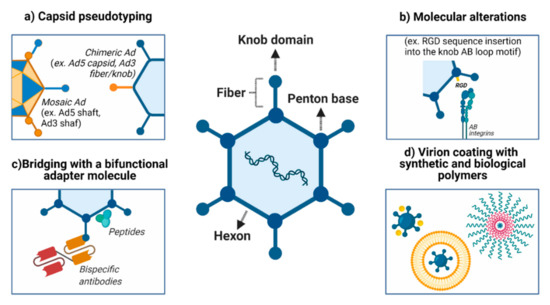
Recent preclinical and clinical studies have used viral vectors in gene therapy research, especially nonreplicating adenovirus encoding strategic therapeutic genes for cancer treatment. Adenoviruses were the first DNA viruses to go into therapeutic development, mainly due to well-known biological features: stability in vivo, ease of manufacture, and efficient gene delivery to dividing and nondividing cells. However, there are some limitations for gene therapy using adenoviral vectors, such as nonspecific transduction of normal cells and liver sequestration and neutralization by antibodies, especially when administered systemically. On the other hand, adenoviral vectors are amenable to strategies for the modification of their biological structures, including genetic manipulation of viral proteins, pseudotyping, and conjugation with polymers or biological membranes. Such modifications provide greater specificity to the target cell and better safety in systemic administration; thus, a reduction of antiviral host responses would favor the use of adenoviral vectors in cancer immunotherapy. In this review, we describe the structural and molecular features of nonreplicating adenoviral vectors, the current limitations to their use, and strategies to modify adenoviral tropism, highlighting the approaches that may allow for the systemic administration of gene therapy.

View on the web

Cancers, Vol. 13, Pages 1864: Genetic Analysis Reveals Rare Variants in T-Cell Response Gene MR1 Associated with Poor Overall Survival after Urothelial Cancer Diagnosis

xloma.fota13 shared this article with you from Inoreader
Via Cancers

cancers-13-01864-g001-550.jpg

Cancers, Vol. 13, Pages 1864: Genetic Analysis Reveals Rare Variants in T-Cell Response Gene MR1 Associated with Poor Overall Survival after Urothelial Cancer Diagnosis

Cancers doi: 10.3390/cancers13081864

Authors: Lisa Bang Manu Shivakumar Tullika Garg Dokyoon Kim

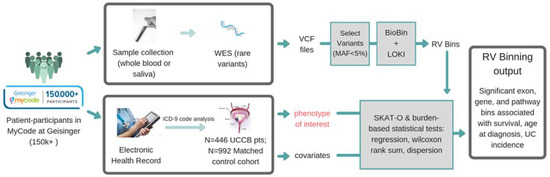
Urothelial carcinoma of the bladder (UC) is the fifth most common cancer in the United States. Germline variants, especially rare germline variants, may account for a portion of the disparity seen among patients in terms of UC incidence, presentation, and outcomes. The objectives of this study were to identify rare germline variant associations in UC incidence and to determine its association with clinical outcomes. Using exome sequencing data from the DiscovEHR UC cohort (n = 446), a European-ancestry, North American population, the complex influence of germline variants on known clinical phenotypes were analyzed using dispersion and burden metrics with regression tests. Outcomes measured were derived from the electronic health record (EHR) and included UC incidence, age at diagnosis, and overall survival (OS). Consequently, key rare variant association genes were implicated in MR1 and ADGRL2. The Kaplan–Meier survival analysis reveals that individuals with MR1 germline varian ts had significantly worse OS than those without any (log-rank p-value = 3.46 × 10⁻⁷). Those with ADGRL2 variants were found to be slightly more likely to have UC compared to a matched control cohort (FDR q-value = 0.116). These associations highlight several candidate genes that have the potential to explain clinical disparities in UC and predict UC outcomes.

View on the web

Δευτέρα 12 Απριλίου 2021

The Influence of Music on Neurosurgical Cases: A Neglected Knowledge

xloma.fota13 shared this article with you from Inoreader

10-1055-s-0040-1721017_192579oa-1.jpg

J Neurol Surg A Cent Eur Neurosurg
DOI: 10.1055/s-0040-1721017

Background The human brain can respond to and participate in music. Learning to play a musical instrument requires complex multimodal skills involving the simultaneous perception of several sensory modalities. In case of brain damage, the musician and nonmusician brains may have different capacities for reorganization and neural remapping. We aimed to investigate the effect of music on patients who had a brain tumor and/or underwent a neurosurgical procedure, comparing the recovery of those who had a musical background with those who did not. Methods A literature review was performed to search for any evidence on this issue. We divided the cases into two groups: as group I consisted of the nonmusician patients, while group II consisted of musicians with a neurosurgical disease. Studies were rated from 0 (no effect) to 4 (high effect). Results We found seven published studies as well as case reports. It was observed that the outcomes and quality of life of the musician group were better than those of the control groups or nonmusician patients in all of the investigated studies, but no statistical difference between musicians and nonmusicians was found. Conclusion Music-related structural changes in the brain may occur in musicians. However with limited number of cases, it cannot be assorted the improved recovery in musicians after neurosurgical disease or procedures by his or her enhanced plasticity. There are limited number of cases, for that reason, it cannot be assorted the improved recovery in musicians after neurosurgical disease or procedures by his or her enhanced plasticity. Professional musicians, who are making a living through their musical abilities, may also have a strong motivation to undergo stressful and enduring rehabilitation. An early restart of the musical activity in musicians with neurosurgical disease may lead to better outcomes, better quality of life, and better psychological parameters, in a shorter time than in nonmusicians.
[...]

Georg Thieme Verlag KG Rüdigerstraße 14, 70469 Stuttgart, Germany

Article in Thieme eJournals:
Table of contents  |  Abstract  |  Full text

View on the web

Efficacy of Internal Neurolysis for Trigeminal Neuralgia without Vascular Compression

xloma.fota13 shared this article with you from Inoreader

10-1055-s-0041-1723809_202789oa-1.jpg

J Neurol Surg A Cent Eur Neurosurg
DOI: 10.1055/s-0041-1723809

Background and Objective Trigeminal neuralgia is a common neurologic disease that seriously impacts a patient's quality of life. We retrospectively investigated the efficacy and safety of internal neurolysis (nerve combing) for trigeminal neuralgia without vascular compression. Patients and Methods This study was a retrospective review of all patients with trigeminal neuralgia who were admitted between January 2014 and February 2019. A subgroup of 36 patients had no vascular compression at surgery and underwent internal neurolysis. Chart review and postoperative follow-up were performed to assess the overall outcomes of internal neurolysis. Results Thirty-six patients were identified, with a mean age of 44.89 ± 7.90 (rang: 31–65) years and a disease duration of 5.19 ± 2.61 years. The immediate postoperative pain relief (Barrow Neurological Institute [BNI] pain score of I or II) rate was 100%. The medium- to long-term pain relief rate was 91.7%. Three patients experienced recurrence. Facial numbness was the primary postoperative complication. Four patients with a score of III on the BNI numbness scale immediately after surgery had marked improvement at 6 months. No serious complications occurred. Conclusion Internal neurolysis is a safe and effective treatment for trigeminal neuralgia without vascular compression or clear responsible vessels.
[...]

Georg Thieme Verlag KG Rüdigerstraße 14, 70469 Stuttgart, Germany

Article in Thieme eJournals:
Table of contents  |  Abstract  |  Fu ll text

View on the web

New Design Concept of Nasolabial Flap for the Reconstruction of a Complex Defect in the Alar Base

xloma.fota13 shared this article with you from Inoreader

10-1055-s-0040-1717090_200167let-1.jpg

Facial Plast Surg 2021; 37: 134-135
DOI: 10.1055/s-0040-1717090


Thieme Medical Publishers, Inc. 333 Seventh Avenue, 18th Floor, New York, NY 10001, USA

Article in Thieme eJournals:
Table of contents  |  Full text

View on the web

Combining Laser Resurfacing and Facial Rejuvenation Surgery

xloma.fota13 shared this article with you from Inoreader

10-1055-s-0041-1726314_200297oa-1.jpg

Facial Plast Surg 2021; 37: 233-239
DOI: 10.1055/s-0041-1726314

Facial aging is a multifactorial process involving skin laxity, volume loss, facial rhytids and solar elastosis. Surgical interventions can address the laxity of the skin and restore volume loss but do not fully correct the texture of the skin. Historically, there were concerns over the safety of combining laser resurfacing with facelifting procedures, but now there is much evidence to support the safe use of this combination treatment. When done appropriately, the combination of laser resurfacing with facial rejuvenation surgery can provide a synergistic effect for optimal clinical results. Here, we review the many laser options available and how they may be c ombined safely with surgical facial rejuvenation. We also review clinical contexts and candidate selection to provide safe, reliable results and minimize complications.
[...]

Thieme Medical Publishers, Inc. 333 Seventh Avenue, 18th Floor, New York, NY 10001, USA

Article in Thieme eJournals:
Table of contents  |  Abstract  |  Full text

View on the web

Anatomy and Aging of the Perioral Region

xloma.fota13 shared this article with you from Inoreader

10-1055-s-0041-1725104_200289oa-1.jpg

Facial Plast Surg 2021; 37: 176-193
DOI: 10.1055/s-0041-1725104

Perioral region, although severely impacted by facial aging, is often overlooked in texts on facial rejuvenation. Sun exposure, bone resorption, dynamic contraction of the sphincteric and nonsphincteric oral musculature, gravitational pull, histological changes of the skin, and unhealthy habits all take their toll in this area. Fine wrinkling on the lips, deep nasolabial and mentolabial folds, elongation and flattening of the upper lip, downturned corners of the mouth, marionette lines, diminished vermillion and upper teeth show and chin irregularities are the main signs of this process, raising great concern amongst patients and making the perioral region the most demanded area for facial rejuvenation treatment. A huge armamentarium of surgical and nonsurgical techniques, with or without complex technology, are available to tailor patient's specific needs, from chemodenervation and mild chemical peels to operations designed to restore the size and shape of the lips. In this article we perform a comprehensive review of the contemporary treatment of the aging perioral area, detailing the most common techniques and their nuances.
[...]

Thieme Medical Publishers, Inc. 333 Seventh Avenue, 18th Floor, New York, NY 10001, USA

Article in Thieme eJournals:
Table of contents  |  Abstract  |  Full text

View on the web

Αναζήτηση αυτού του ιστολογίου