Ετικέτες

Τρίτη 10 Μαΐου 2022

Evaluation of Lipocalin-2 and Twist expression in thyroid cancers and its relationship with epithelial mesenchymal transition

alexandrossfakianakis shared this article with you from Inoreader

1-s2.0-S1092913421X0007X-cov150h.gif

Publication date: Available online 10 May 2022

Source: Annals of Diagnostic Pathology

Author(s): Pınar Celepli, İrem Bigat, Sefika Karabulut, Salih Celepli, Sema Hücümenoğlu

View on the web

Alpha variant coronavirus outbreak in a nursing home despite high vaccination coverage: molecular, epidemiological and immunological studies

alexandrossfakianakis shared this article with you from Inoreader
Abstract
Background
Vaccination may control the COVID-19 pandemic, including in nursing homes where many high-risk people live. We conducted extensive outbreak investigations.
Methods
We studied an outbreak at a nursing home in Switzerland where vaccination uptake of mRNA vaccines against SARS-CoV-2 was 82% among residents as of Jan 21/2021. After a vaccinated symptomatic HCW was diagnosed with COVID-19 on Feb 22, we did an outbreak investigations in house A (47 residents, 37 HCWs) using SARS-CoV-2-specific PCR in nasopharyngeal swabs. We performed whole-genome sequencing of SARS-CoV-2 and serological analyses.
Results
We identified 17 individuals with positive PCR tests; ten residents (five vaccinated) and seven HCWs (three vaccinated). Median age among residents was 86 years (interquartile range [IQR] 70-90) and 49 years (IQR 29-59) among HCWs. Among the five vaccinated residents, 60% had mild disease and had 40% no symptoms, whereas all five unvaccinated residents had mild to severe disease and two died. The vaccine effectiveness for the prevention of infection among the residents was 73.0% (95% Cl 24.7-90.1). The 12 available genomes were all alpha variants. Neutralizing titers were significantly higher in vaccinated individuals upon re-exposure (>1 week after diagnosis) than in vaccinated, unexposed HCWs (p=0.012). Transmission networks indicated four likely or possible transmissions from vaccinated to other individuals, and 12 transmission events from unvaccinated individuals.
Conclusions
COVID-19 outbreaks can occur in nursing homes, including transmission from vaccinated persons to others. Outbreaks might occur silently, underlining the need for continued testing and basic infection control measures in these high-risk settings.
View on the web

Does a combination of self‐reported signs related to central sensitization and pressure pain threshold allow for a more detailed classification of pain‐related characteristics in patients with chronic musculoskeletal pain?: A cross‐sectional study

alexandrossfakianakis shared this article with you from Inoreader

Abstract

Objectives

The clinical utility of combining the central sensitization (CS) inventory (CSI) with the pressure pain threshold (PPT) in assessing the effect of central sensitization on pain is unknown. This study aimed to investigate (1) the effects of CSI, PPT, and their interaction on pain and (2) the characteristics of clinical symptoms in patients with chronic musculoskeletal pain grouped according to the CSI score and PPT value.

Method

A total of 187 participants with chronic musculoskeletal pain were recruited. PPT, brief pain inventory, widespread pain index, pain-catastrophizing scale, EuroQol-5 dimension, and CSI were assessed. Multiple regression analyses were performed using pain intensity and interference scores as dependent variables and the CSI score and PPT value as independent variables. Hierarchical cluster analysis was also performed to classify the participants into subgroups according to the CSI score and PPT value. Following the classification, pain-related characteristics and health-related QOL were compared among the subgroups.

Results

Multiple regression analyses demonstrated that only the CSI score significantly affected pain intensity and interference. As a result of the cluster analysis, three groups were identified: cluster 1 (n = 61, CSI low/PPT low group), cluster 2 (n = 78, CSI low/PPT high group), and cluster 3 (n = 48, CSI high/PPT low group). The CSI high/PPT low group had higher incidence of pain-related symptoms than the CSI low groups regardless of the PPT value.

Conclusions

Combined CSI and PPT may not fully allow a detailed classification of pain-related characteristics. The CSI may be clinically more useful for assessing the effect of CS on pain-related symptoms.

View on the web

Influence of lingual plate fracture pattern on remodelling site during the healing process of sagittal split ramus osteotomy

alexandrossfakianakis shared this article with you from Inoreader
The purpose of this study was to investigate whether differences in the pattern of the lingual plate split in sagittal split ramus osteotomy (SSRO) affect the remodelling of the split site. Sixty-one patients with mandibular prognathism (122 sides) underwent SSRO. Computed tomography (CT) was performed at 1 week and 1 year after SSRO. Bone splits were classified according to the lingual split scale (LSS) and the lateral bone cut end (LBCE) by evaluating CT images at 1 week. The remodelling at the split sites was evaluated by superimposing the CT images obtained at 1 week and 1 year. (Source: International Journal of Oral and Maxillofacial Surgery)
View on the web

Δευτέρα 9 Μαΐου 2022

Perceptions of NZ orthodontists and periodontists on the management of gingival recession in orthodontic patients

alexandrossfakianakis shared this article with you from Inoreader

ABSTRACT

Background

This study aimed to investigate the perceptions and opinions of orthodontists and periodontists on the management of gingival recession in orthodontic patients.

Methods

An online survey was sent to 29 periodontists and 80 orthodontists registered and currently practising in New Zealand. All participants answered questions about the timing and clinical indications of mucogingival surgeries in orthodontic patients diagnosed with mucogingival deformities.

Results

Most periodontists and orthodontists believed that gingival grafts should ideally be performed after orthodontic treatment. In clinical practice, 40% of periodontists indicated that they would receive referrals after completion of orthodontic treatment. However, 29.6% of orthodontists indicated that they would refer to a periodontist before orthodontic treatment in clinical practice. The most crucial factor that affected periodontists' decision making was 'evidence-based guidelines' (35.0%), followed by 'clinical experience' (30.0%) and 'patient concerns' (15.0%). All four factors of 'gingival phenotype', 'presence of gingival recession', 'amount of keratinised tissue' and 'planning specific tooth movements' were equally considered by orthodontists regarding their decision-making.

Conclusions

The majority of the surveyed New Zealand periodontists and orthodontists expressed a belief that the ideal timing for the management of gingival recessions would be after the completion of orthodontic treatment. © 2022 Australian Dental Association.

View on the web

Identification of non-synonymous variations in ROBO1 and GATA5 genes in a family with bicuspid aortic valve disease

alexandrossfakianakis shared this article with you from Inoreader

Journal of Human Genetics, Published online: 09 May 2022; doi:10.1038/s10038-022-01036-x

Identification of non-synonymous variations in ROBO1 and GATA5 genes in a family with bicuspid aortic valve disease
View on the web

Avoidance of cutaneous adverse drug reactions induced by antiepileptic drugs based on pharmacogenomics

alexandrossfakianakis shared this article with you from Inoreader

Journal of Human Genetics, Published online: 09 May 2022; doi:10.1038/s10038-022-01040-1

Avoidance of cutaneous adverse drug reactions induced by antiepileptic drugs based on pharmacogenomics
View on the web

Synergistic antibacterial effects of low-intensity ultrasound and peptide LCMHC against Staphylococcus aureus

alexandrossfakianakis shared this article with you from Inoreader

1-s2.0-S0168160522X00093-cov150h.gif

Publication date: Available online 9 May 2022

Source: International Journal of Food Microbiology

Author(s): Zijin Yuan, Jude Juventus Aweya, Jian Li, Zhongyan Wang, Shiying Huang, Mingjing Zheng, Linfan Shi, Shanggui Deng, Shen Yang

View on the web

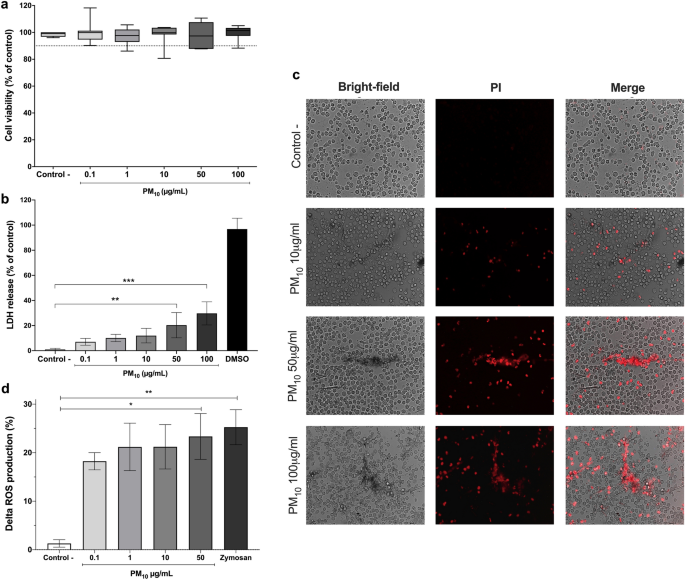
Particulate matter (PM10) induces in vitro activation of human neutrophils, and lung histopathological alterations in a mouse model

alexandrossfakianakis shared this article with you from Inoreader

41598_2022_11553_Fig1_HTML.png

View on the web

Κυριακή 8 Μαΐου 2022

Prepubertal BMI, pubertal growth patterns, and long-term BMI: Results from a longitudinal analysis in Chinese children and adolescents from 2005 to 2016

alexandrossfakianakis shared this article with you from Inoreader

European Journal of Clinical Nutrition, Published online: 06 May 2022; doi:10.1038/s41430-022-01133-2

Prepubertal BMI, pubertal growth patterns, and long-term BMI: Results from a longitudinal analysis in Chinese children and adolescents from 2005 to 2016
View on the web

Hypokalaemia associated with hydrochlorothiazide used in the treatment of hypertension in NHANES 1999–2018

alexandrossfakianakis shared this article with you from Inoreader

Journal of Human Hypertension, Published online: 06 May 2022; doi:10.1038/s41371-022-00704-x

Hypokalaemia associated with hydrochlorothiazide used in the treatment of hypertension in NHANES 1999–2018
View on the web

Estimation of the COVID‐19 Mean Incubation Time: Systematic Review, Meta‐analysis, and Sensitivity Analysis

alexandrossfakianakis shared this article with you from Inoreader

Abstract

Objectives

Providing sensible estimates of the mean incubation time for COVID-19 is important yet complex. This study aims to provide sensible estimates of the mean incubation time of COVID-19 by capitalizing on available estimates reported in the literature and exploring different ways to accommodate heterogeneity involved in the reported studies.

Methods

Online databases between January 1 of 2020 and May 20 of 2021 are first searched to obtain estimates of the mean incubation time of COVID-19 from available studies, and meta-analyses are then conducted to generate synthetic estimates. Heterogeneity of the studies is examined via the use of Cochran's Q statistic and Higgin's & Thompson's I2 statistic, and subgroup analyses are conducted using mixed effects models. The publication bias issue is assessed using the funnel plot and Egger's test.

Results

Using all those reported mean incubation estimates for COVID-19, the mean incubation time is estimated to be 6.43 days with a 95% confidence interval (CI) (5.90, 6.96), and using all those reported mean incubation estimates together with those transformed median incubation estimates, the estimated mean incubation time is 6.07 days with a 95% CI (5.70,6.45).

Conclusions

The reported estimates of the mean incubation time of COVID-19 vary considerably due to multiple reasons, including heterogeneity and publication bias. To alleviate these issues, we take different angles to provide a sensible estimate of the mean incubation time of COVID-19. Our analyses show that the mean incubation time of COVID-19 between January 1 of 2020 and May 20 of 2021 ranges from 5.68 days to 8.30 days.

This article is protected by copyright. All rights reserved.

View on the web

Use of Saliva and RT‐PCR Screening for SARS‐CoV‐2 Variants of Concern: Surveillance and Monitoring

alexandrossfakianakis shared this article with you from Inoreader

ABSTRACT

Genomic surveillance has been applied since the beginning of the COVID-19 pandemic to track the spread of virus, leading to characterization of multiple SARS-CoV-2 variants, including Variants of Concern (VOC). Although sequencing is the standard method, rapid molecular test for screening and surveillance of VOC is considered for detection. Furthermore, using alternative saliva as specimen collection, facilitates the implementation of a less invasive, self-collected sample. In this study, we applied a combinatory strategy of saliva collection and RT-PCR for SARS-CoV-2 VOC detection. Saliva samples from patients attending at a tertiary hospital with suspected COVID-19 were collected and SARS-CoV-2 RNA was detected using SARS-CoV-2 RT-qPCR reagent kit (PerkinElmer). Positive saliva samples were screened for SARS-CoV-2 VOC with previously described RT-PCR for Alpha, Beta and Gamma variants. Saliva samples were positive in 171 (53%) of 324 tested. A total of 108 (74%) from positive samples were also positive for VOC by RT-PCR screening. Those samples were found between January and August 2021. This approach allowed us to successfully use an alternative and complementary tool to genomic surveillance to monitoring the circulation of SARS-CoV-2 VOC in the studied population.

This article is protected by copyright. All rights reserved.

View on the web

Αναζήτηση αυτού του ιστολογίου